Nikita Kucherov saved his best for his 30s
No forward since 2007–08 has played better from 30 to 32, and the climb came at five-on-five, not on the power play. Now he wants out of Tampa.
Nikita Kucherov is 33, in the last season of his contract, and he wants out. He has told the Tampa Bay Lightning he won't re-sign and has asked for a trade, TSN reported this week. General manager Julien BriseBois answered in one sentence: "We unequivocally have no intention of trading Nikita."
Whatever happens next, Tampa is being asked to move a player who did something no forward in nearly two decades has matched. His best hockey came after he turned 30. From 30 to 32, he produced more WAR per 82 games than any forward since 2007–08 managed at that age. His two best seasons came at 30 and 31. In the first of them he had 100 assists and won the Art Ross Trophy.

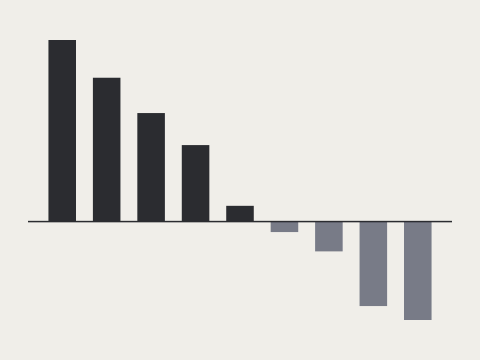
Fewer than a third of regular forwards improve in their early 30s. None got as good as he did
Aging is usually a slow leak. Some of the forwards who do climb, like Chris Kreider and Zach Hyman, made big jumps and landed about where Kucherov had already been in his late 20s.
Kucherov climbed from there, from 1.67 wins per 82 games to 2.42, a rate no other forward since 2007–08 has reached at that age. Sidney Crosby, the closest on the chart, was better in his late 20s than in his early 30s. Widen the window to everything a forward did after turning 30, and Kucherov still leads, a hair ahead of Pavel Datsyuk.
This isn't a ranking for old men, either. Over the same three seasons, his rate puts him among the league's top handful of forwards at any age, alongside Nathan MacKinnon, Connor McDavid and Leon Draisaitl.

The climb came at five-on-five, not on the power play
Ask where a skilled veteran found his extra gear and you'd guess the power play, where Kucherov still sets up goals as well as anyone in the league. You'd be wrong. Between his late 20s and his early 30s, his contribution in five-on-five play more than doubled and his finishing ticked up, while his power-play contribution was smaller than it had been in his late 20s.
So the player who got better after 30 didn't get there by specializing. He got better at the hockey everyone plays, at even strength.

The numbers show where he got better, not why. What the people around him describe is how he works. "You talk to any player and ask who works on the craft the most and the hardest, and 100 percent he'll be the guy they say," Lightning coach Jon Cooper told NHL.com's Dan Rosen in January.
He barely touches the puck before it's gone
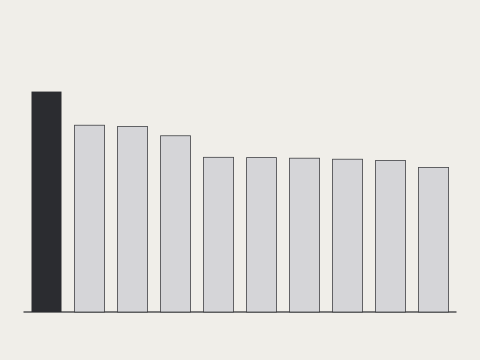
That's the climb. The other question is what kind of offence the best early-30s forward since 2007–08 actually plays, and why it doesn't look like the other stars'. It starts with his release. At five-on-five, most goals around the league come after a touch to settle the puck. Most of his don't. Over the last three seasons, two-thirds of his five-on-five goals were one-touch, released within three-tenths of a second of the puck reaching him, one of the 10 highest shares in the league. On his typical goal, the puck was on his stick for two-tenths of a second; around the league, it's half a second.
On the power play, the shot comes from one place. Almost every power-play goal he scored in those three seasons came from his right side of the ice.
Coaches, players and scouts reach for the same words. Cooper: "His mastery of his skill set and his deception out there, it's uncanny what he can do." Josh Manson: "I think deception is a real key to his game." An anonymous veteran pro scout told The Athletic he's "a f---ing surgeon." And he finishes what he takes: over these three seasons he has been among the league's best finishers, scoring well above what his chances were worth.

On the power play, most of his setups start on his flank
The power play isn't where he got better, but it's where his passing is easiest to see. Over the last three regular seasons, he and McDavid have set up the most five-on-four goals with the last pass, level with each other and well clear of MacKinnon. At five-on-five, he and MacKinnon are a step behind only David Pastrnak in goals set up with the last pass.
On the power play, seven in 10 of his setups started on his right flank, the same side his goals come from. Same spot, two threats.
Brayden Point has been the man on the end of it, scoring almost a third of the goals we tracked Kucherov setting up. Fittingly, the assist that made Kucherov the Lightning's career points leader on October 24, his 1,138th point in his 890th game, one past Steven Stamkos, set up a Point power-play goal.

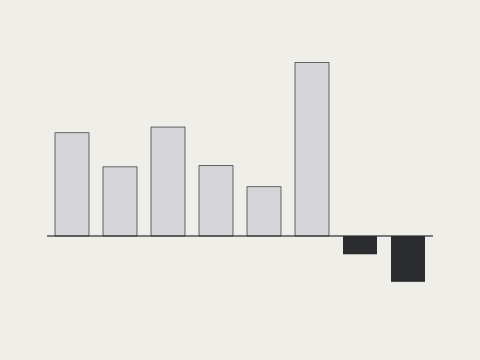
His play has been worth nearly a maximum contract. His cap hit is $9.5 million
All of this has come cheap. Kucherov signed an eight-year, $76 million contract in July 2018. Its $9.5 million cap hit is 9.1% of this season's $104 million cap. Over the last three seasons, his play has been worth $20.1 million a full season in cap dollars, nearly this season's maximum contract of $20.8 million. His cap hit is less than half of that.
A team that trades for him gets the last year of that deal, and he has a say: his modified no-trade clause lists 10 teams he'd accept, according to TSN and ESPN. ESPN's sources say he wants to play alongside another of the league's top stars.
The knocks on him are spring and his own end
The case against him starts with spring. The Athletic's panel put him in its top tier in September, writing: "He may be the most creative, dynamic offensive player of his generation." But he scored once in Tampa's seven-game first-round loss to Montreal, the team's fourth straight first-round exit, and an anonymous executive said he was "lousy" in the playoffs. Two Cups, in 2020 and 2021, don't erase that; recent springs are a fair knock.
The other knock is at his own end. The same panel said he'd once been held back by "iffy defensive impacts," and last season that showed again. In 2025–26, he won his second Hart Trophy with 44 goals and 130 points in 76 games, yet by WAR it was the weakest of his three seasons, and the five-on-five game behind his climb had a weak half: his defence ranked in the bottom 15% of regular forwards. Over his first 11 games this season, Tampa has created chances with him on the ice at a rate few forwards match, and given up more than most.
BriseBois says he isn't selling, and it's hard to give up a player no forward his age has matched in nearly two decades. The open question is whether last season was a pause in a climb nobody else has made, or the point where Kucherov's 30s start to look like everyone else's. Whoever has him in April will find out first.
Go deeper
Players and teams
Keep reading