McKenna’s warning sign is the other team’s chances
His own shooting chances came at nearly Celebrini’s debut rate. The chances against with him on the ice were the outlier.
Gavin McKenna’s first eight NHL games leave Toronto with two questions: how much offence he can produce, and how many chances it can afford to give up while he’s on the ice. The second is more urgent.
The questions got louder against Buffalo on October 15. McKenna sat for the final 32:54 of a 5–4 overtime loss and finished with 6:36 of ice time. Toronto coach Jim Hiller later acknowledged he should have put him back out early in the third period, Sportsnet’s Luke Fox reported.
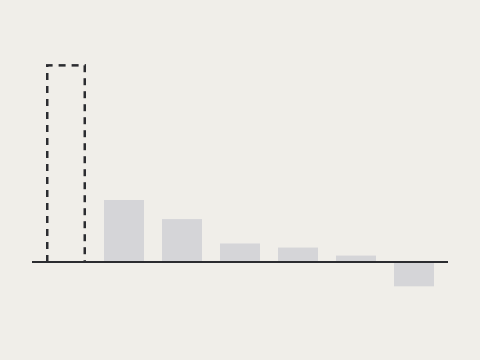
At five-on-five, no first-overall pick from 2018–26, the seasons with comparable chance data, had chances against come faster with him on the ice in his first eight games. Toronto’s own chance creation with McKenna, measured in expected goals, was mid-pack. Ordinary offence, unusually dangerous chances the other way.

Fox described McKenna being beaten up ice before Buffalo’s Jack Quinn scored his second goal, and having trouble slowing opponents through the neutral zone. His linemates share those numbers, but Toronto still has to make his shifts work.
The penalty record barely registers. McKenna drew one minor and took two, the same net minus one as Alexis Lafrenière and Juraj Slafkovský; the other nine picks drew more than they took.
The case for more opportunity is strongest at the other end. Among the forwards picked first from 2015–26, only Slafkovský averaged less total ice time in his first eight games. McKenna also had much less power-play time than Connor Bedard or Macklin Celebrini.

Count his own five-on-five chances by the minute and most of the gap with Celebrini disappears. Bedard still generated considerably more. McKenna was getting chances at a recognizable debut pace; he had less time to pile them up.
That argument has a limit. Less ice time can explain a smaller shooting total. It can’t explain away a chances-against rate that already accounts for minutes. More shifts would give his offence room to grow. Whether Toronto can make those shifts less dangerous is the real test, and more minutes alone won’t answer it. Better minutes would.
Go deeper
Players and teams
Keep reading